Filed by Kudzu Country Club · Published June 23, 2026
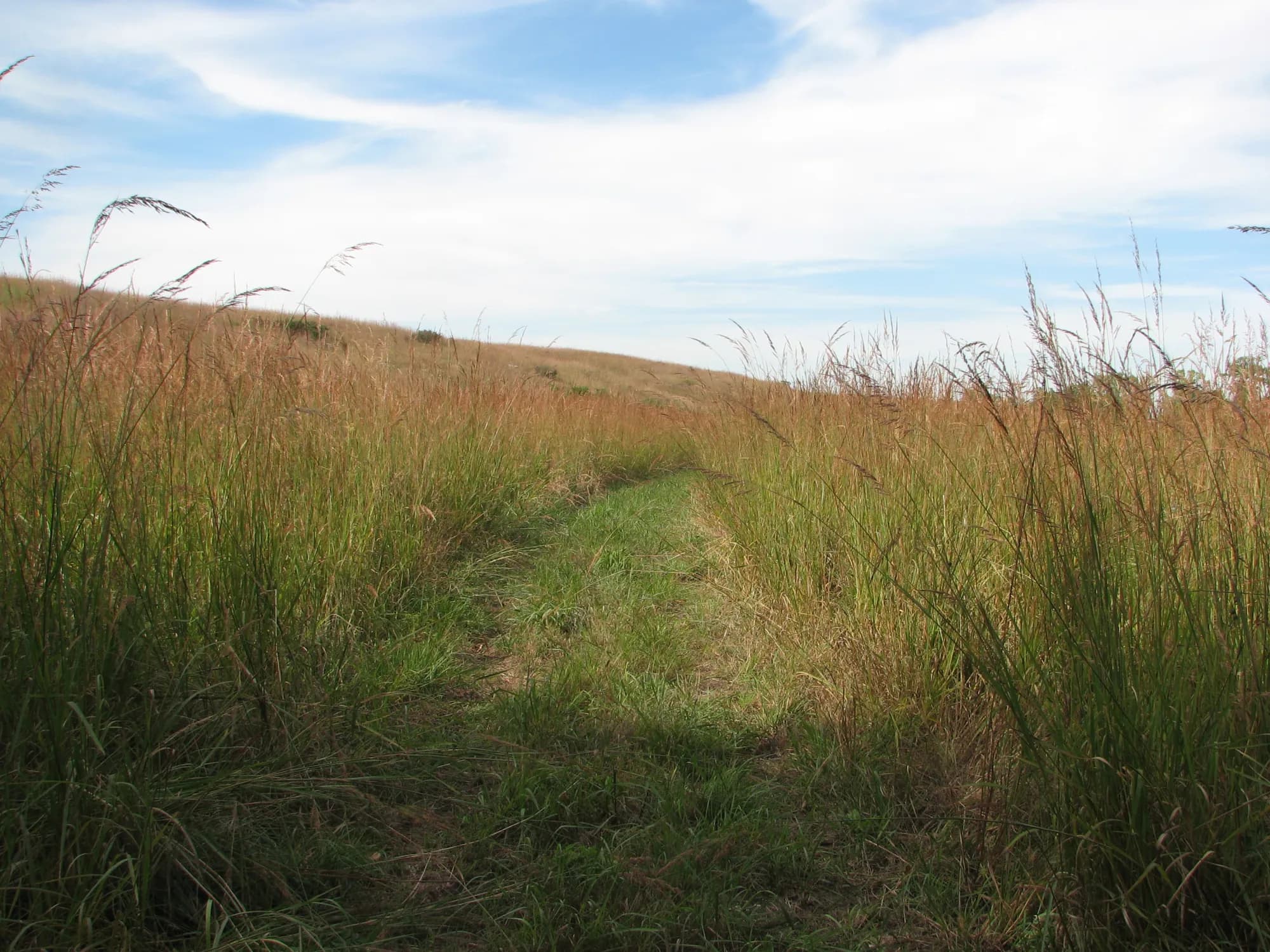
A grassland used to run from Indiana to the edge of the Great Plains, deep and dense, grass taller than a person in a good year. Then came the steel plow, and within a few generations almost all of it became farmland - corn and wheat from horizon to horizon. Less than four percent of the original tallgrass prairie survives anywhere. The single biggest surviving stretch sits in the Flint Hills of eastern Kansas, and the reason is almost funny: the limestone is too close to the surface to plow. The land couldn't be cracked, so it was left as ranch grass, and the prairie quietly persisted underneath.
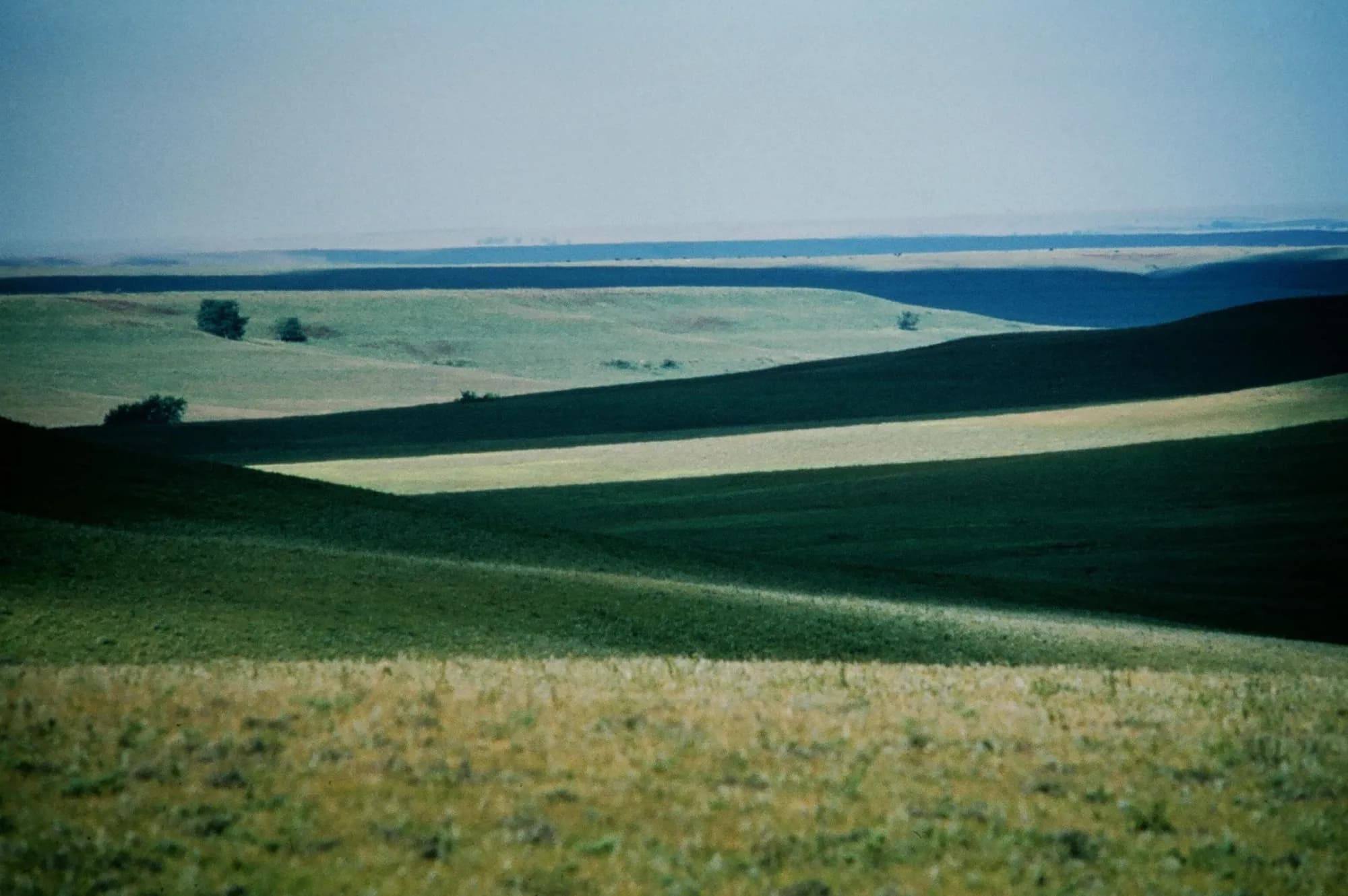
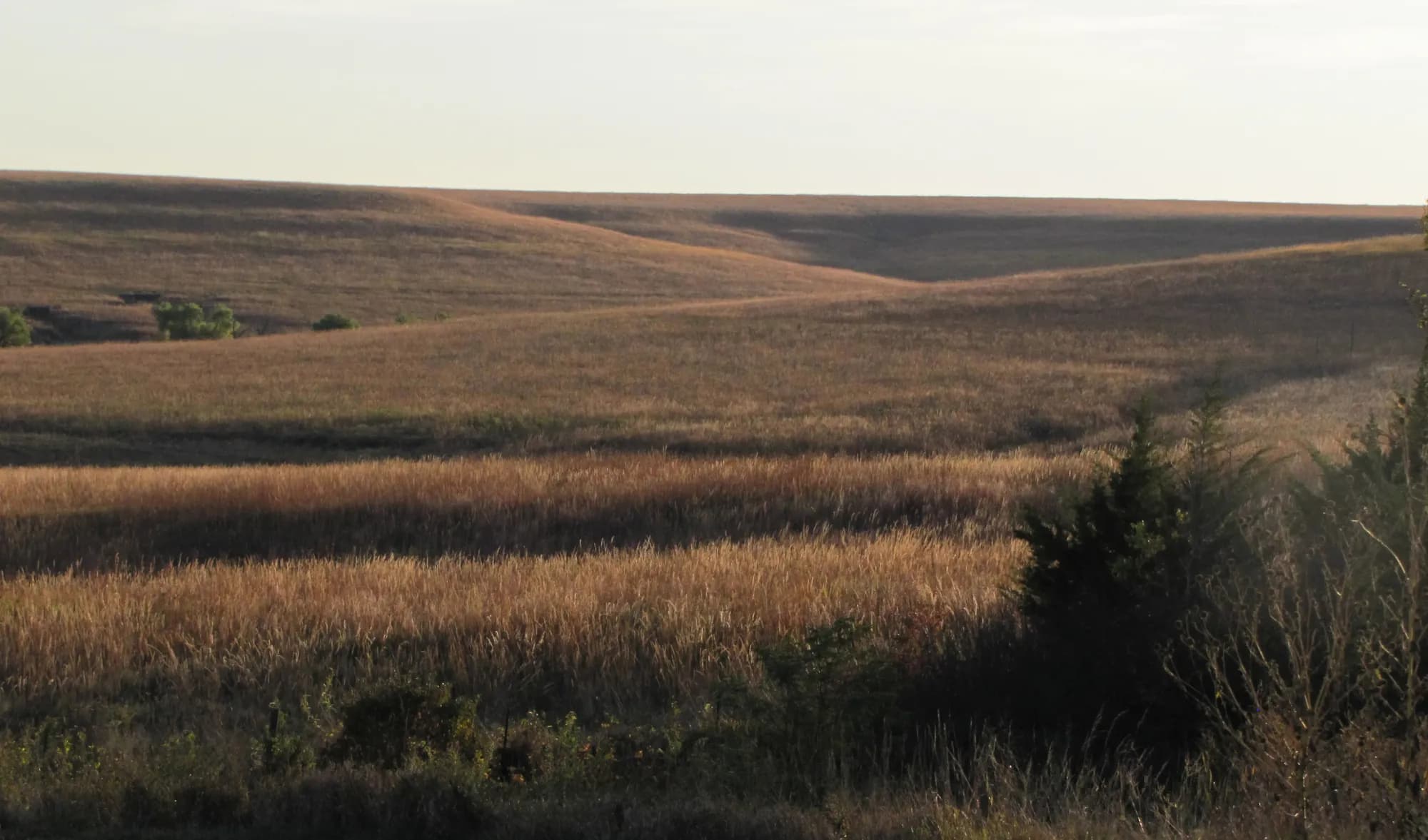
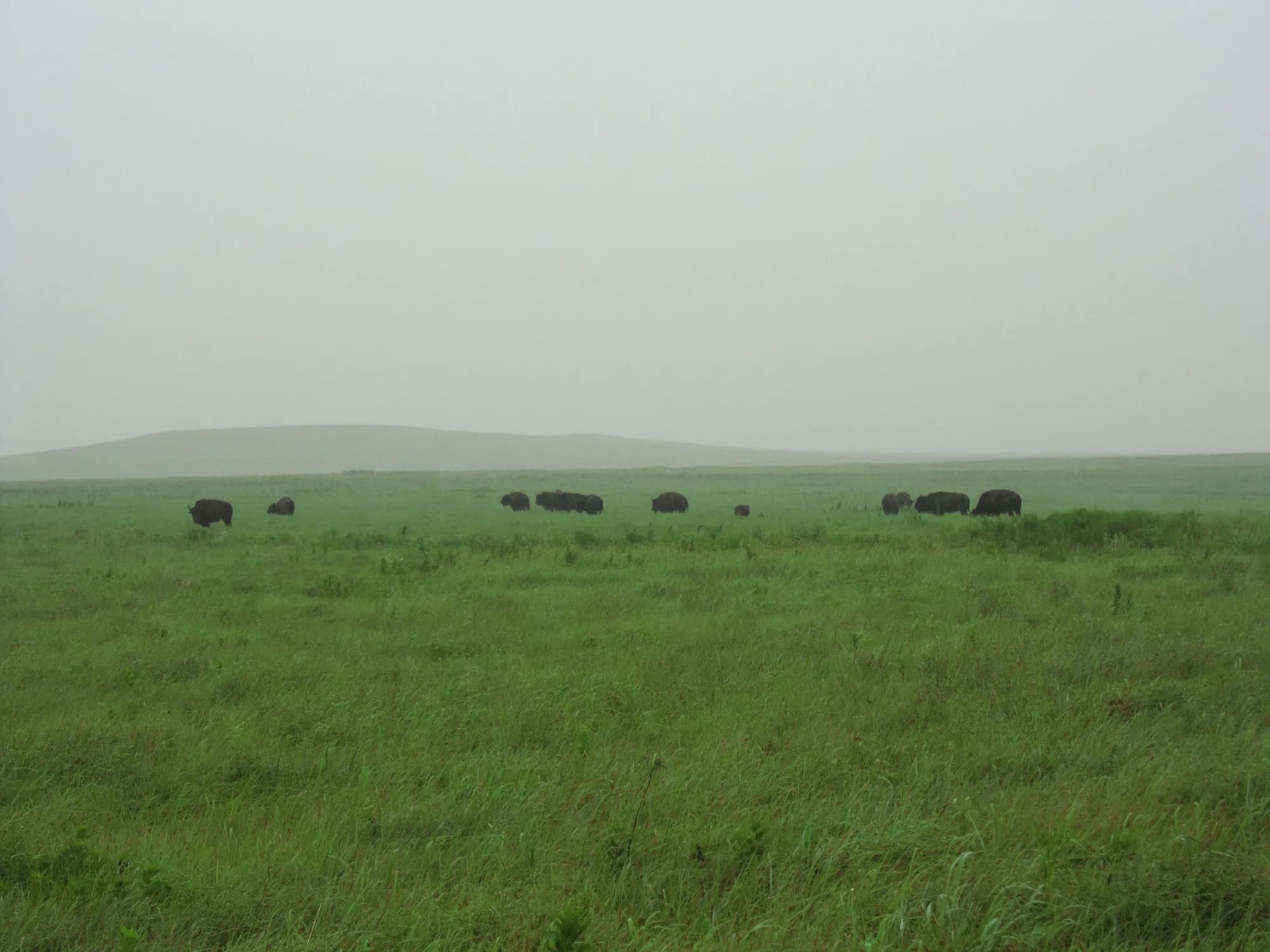
It does not announce itself. There's no mountain, no overlook, no single thing to photograph. It's grass and sky and wind, and the scale only lands once you're standing in it - the way the hills roll without a single tree, the way the wind moves across the grass in long visible waves, the way the horizon just keeps going. Greater prairie-chickens drum on it in spring. A bison herd is being rebuilt on it. Mostly it's silence, weather, and an enormous amount of nothing, which turns out to be the point.
This is the landscape the whole middle of the country used to be, and almost no one alive has seen the real thing. Walk out into it for an hour and you start to understand what was traded away for the breadbasket - and how close it came to vanishing without a single acre left to show what had been there.