Filed by Kudzu Country Club · Published June 22, 2026
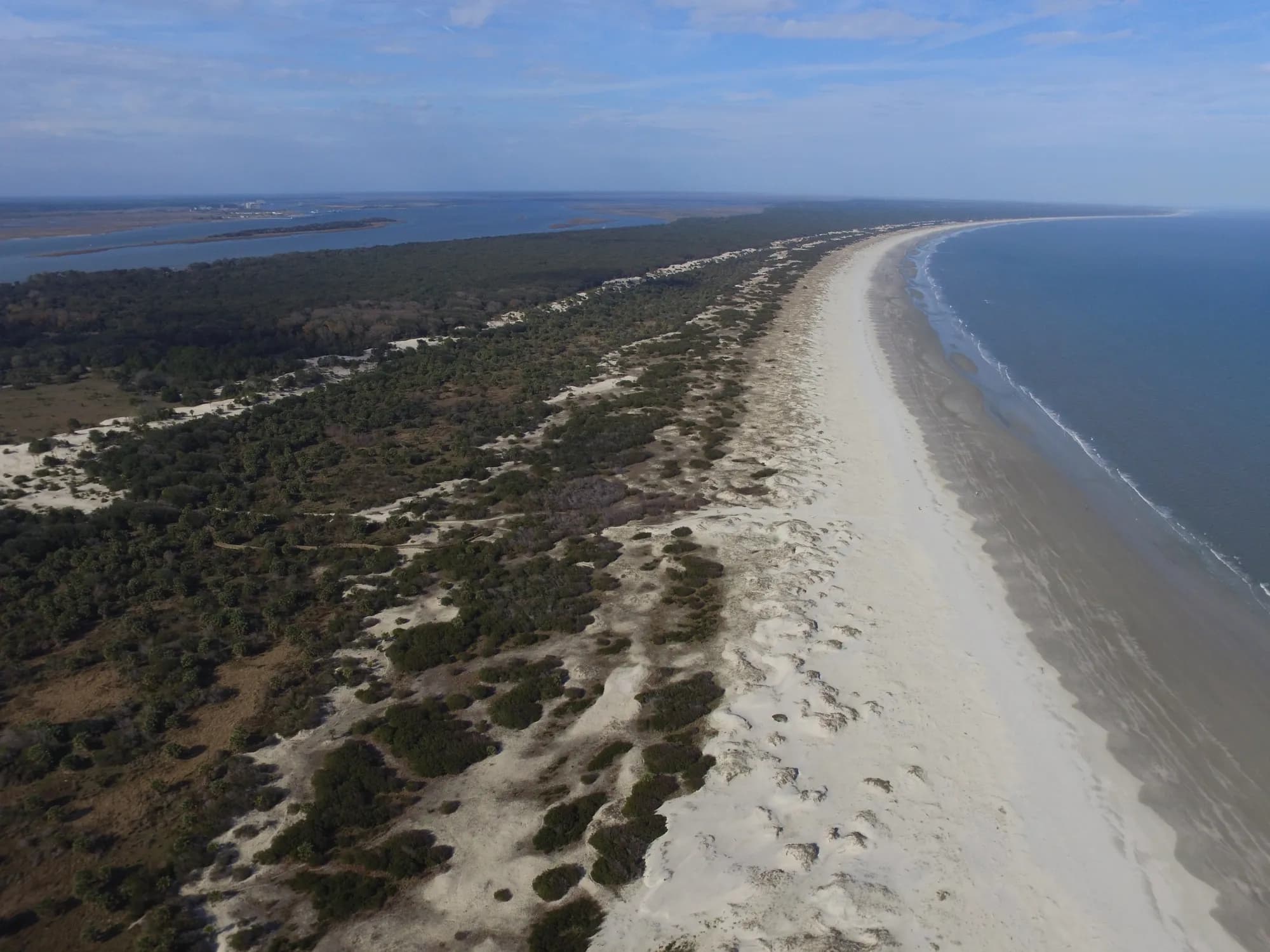
Most people meet Cumberland Island at 70 miles an hour, from I-95, on the way to Florida. That's the first reason it's still wild: you have to mean it. There's no bridge. A passenger ferry runs from St. Marys a few times a day, it caps how many people can land, and that's more or less the entire crowd-control plan. No cars for day visitors, no shops, no boardwalk - just sand roads, salt marsh, and seventeen miles of open Atlantic beach.
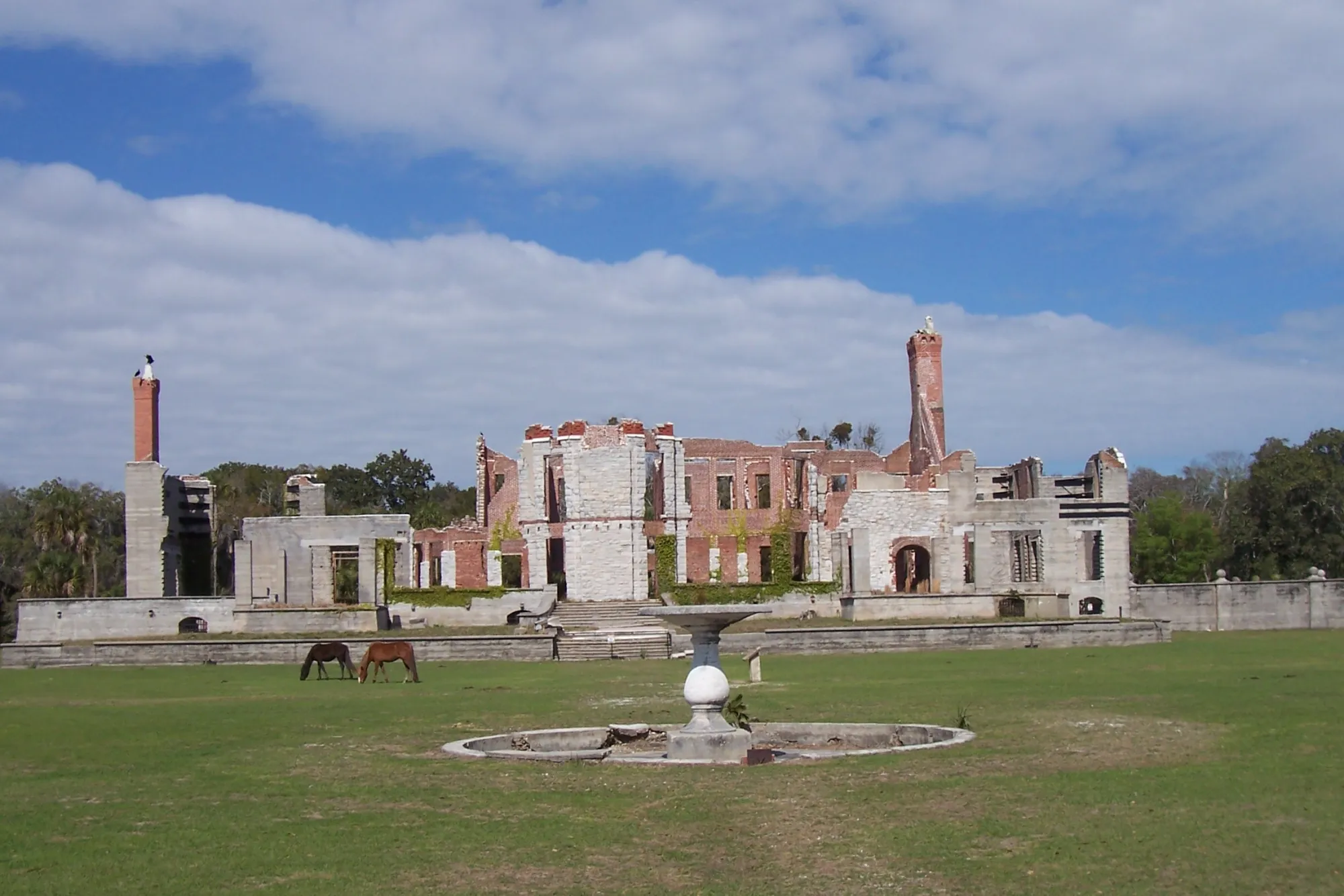
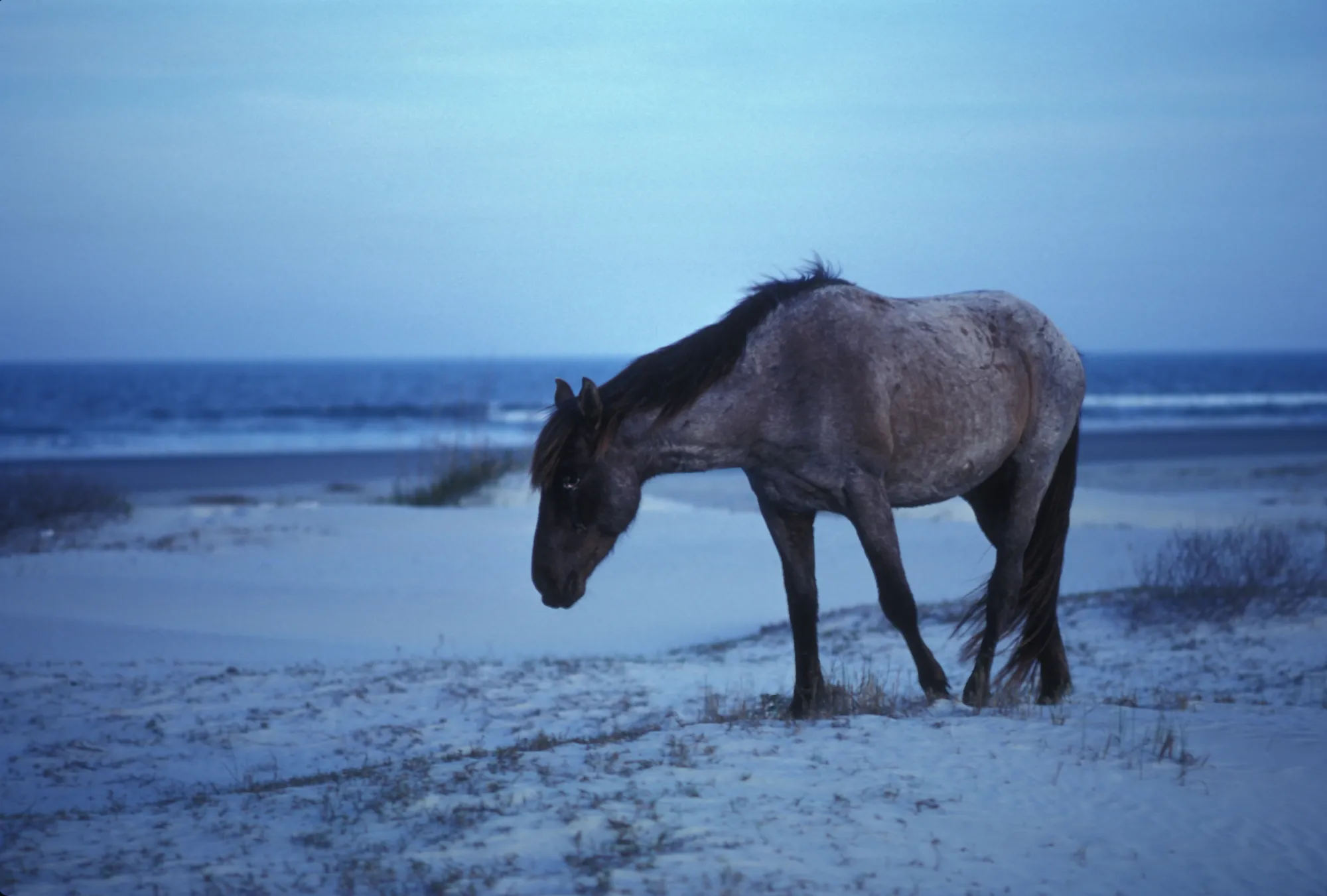
The horses are the part you've probably seen in photos. They're feral in the real sense - nobody feeds them, vets them, or thins the herd. It's the only unmanaged horse population on the Atlantic coast, descended from stock the island's former owners left behind, and they go where they like. Which, often, is the lawn of Dungeness: the burned-out shell of Thomas Carnegie's winter mansion, live oaks and palmettos pushing up through it, horses cropping the grass where the rose garden used to be. It's the most quietly strange sight on the Georgia coast.
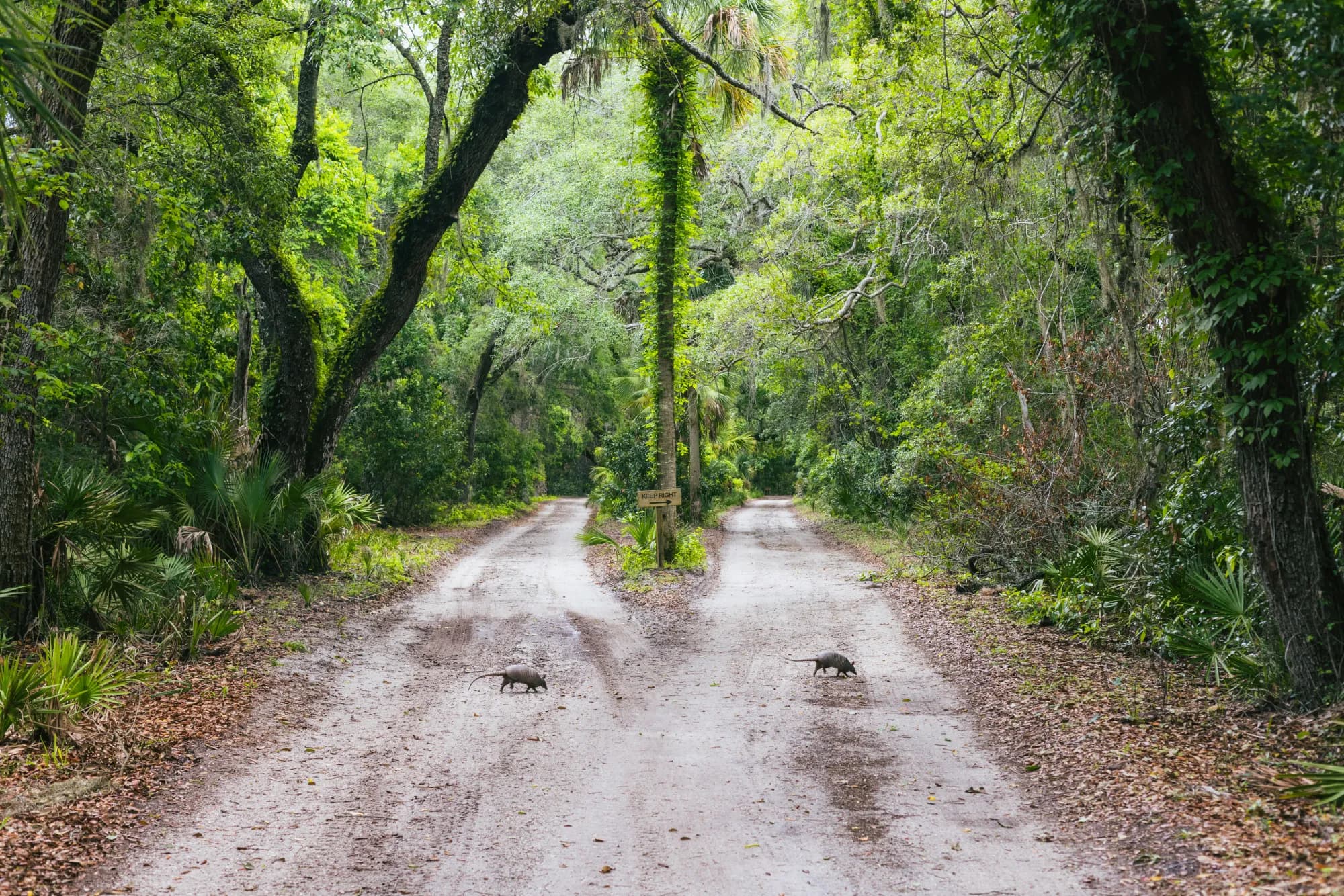
Walk inland and it's maritime forest - live oaks bent low under Spanish moss, armadillos shuffling through the leaf litter, alligators holding still in the tidal creeks. Cross to the ocean side and it opens into dune and beach, where loggerheads haul out to nest through the summer and brown pelicans skim the wave line in single file. You can give it a whole day and pass a dozen people.
It's the coast before anyone decided to improve it. Which is, more or less, the whole reason we draw this stuff.