Filed by Kudzu Country Club · Published June 23, 2026
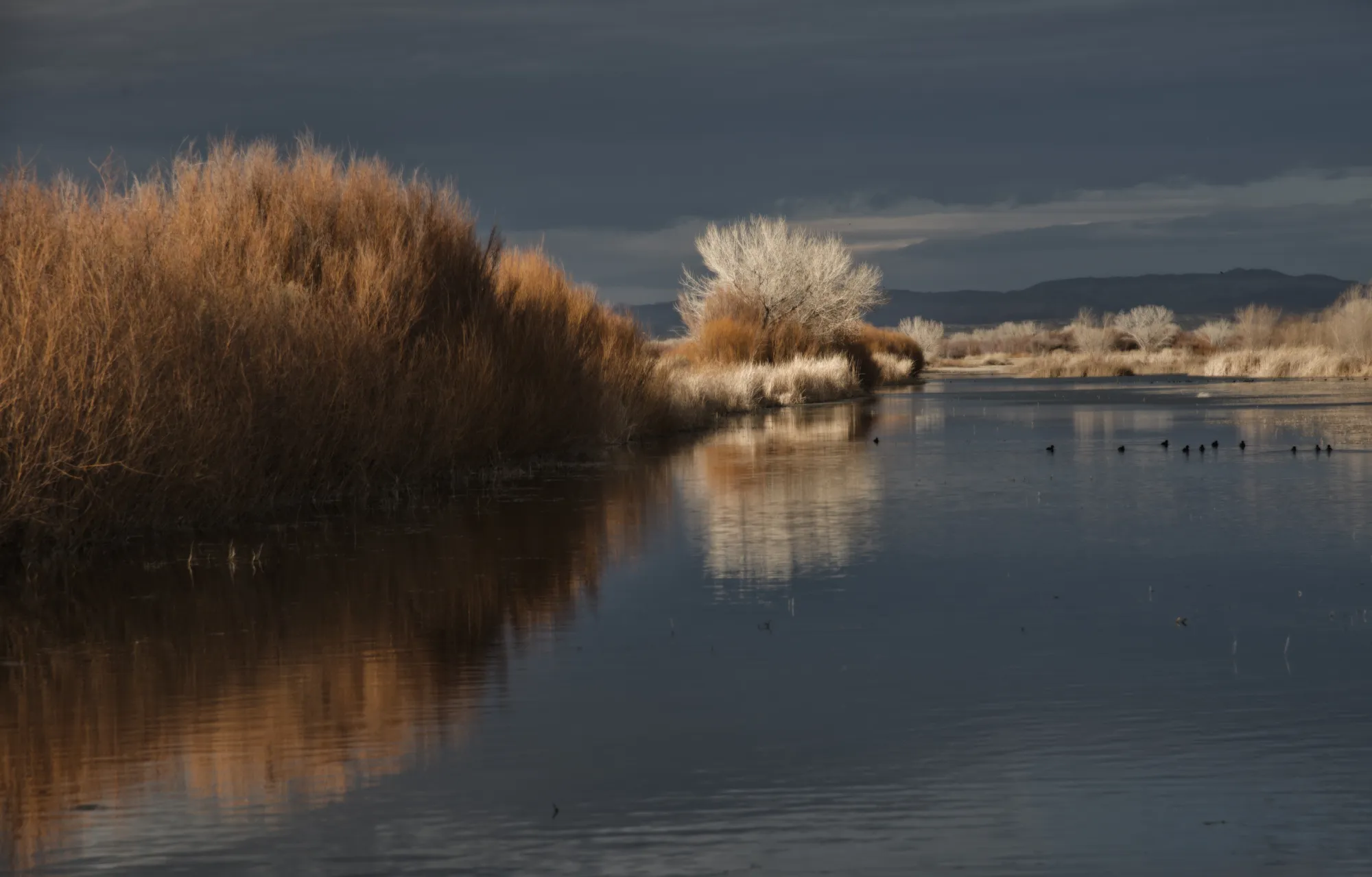
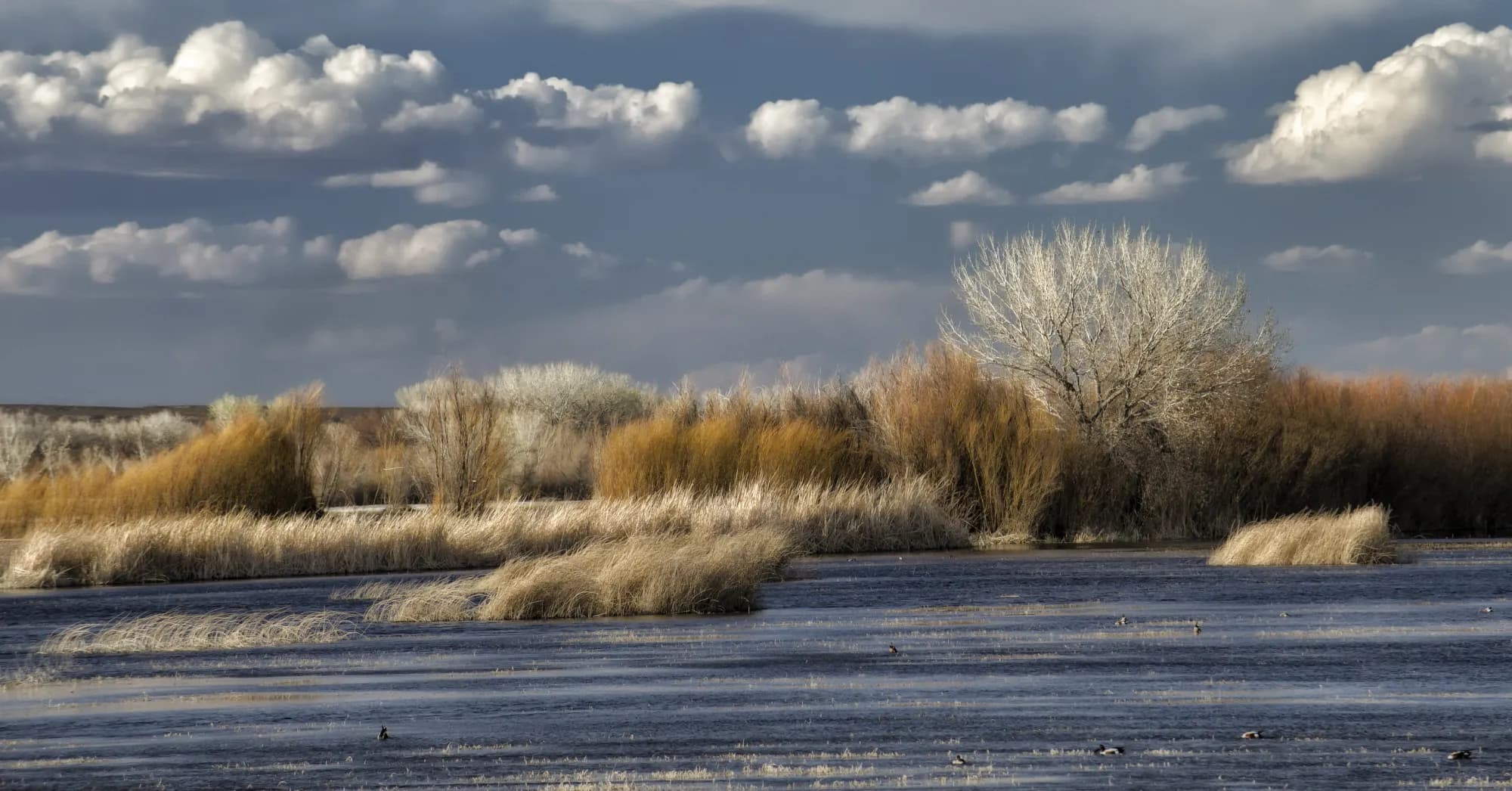
The Rio Grande runs south through the high desert and, for a few miles below Socorro, somebody decided to keep the water on the land instead of letting it rush past. That's the whole refuge: a managed floodplain in the middle of dry country. In summer it's quiet. In winter it's one of the great wildlife spectacles in North America, and almost nobody outside New Mexico has heard of it.
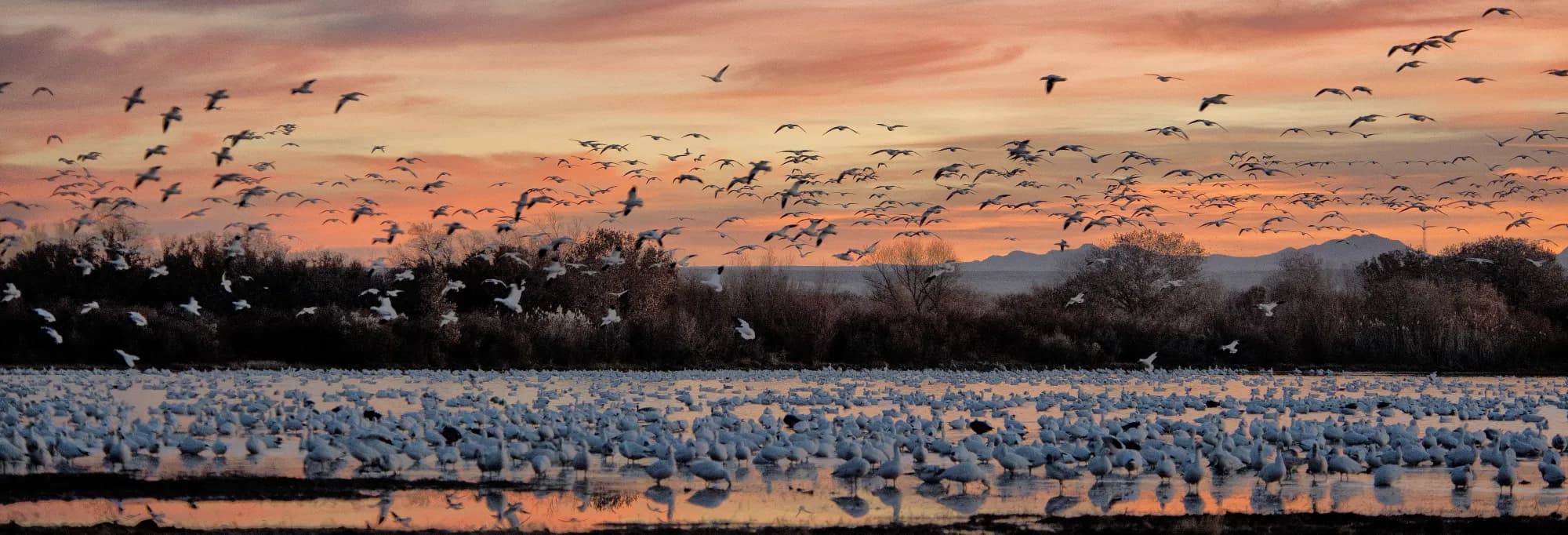
The birds come for the water. Sandhill cranes by the thousand, ducks, and the snow geese - tens of thousands of them, packed onto the shallow ponds so densely the water disappears under white. They roost on the water overnight because predators can't sneak up across it. Then, a little after dawn, something spooks the first few, and the entire flock lifts at once with a sound like the sky tearing. Photographers drive hours and stand in the cold for that one minute. It's called the blast-off, and it earns the name.
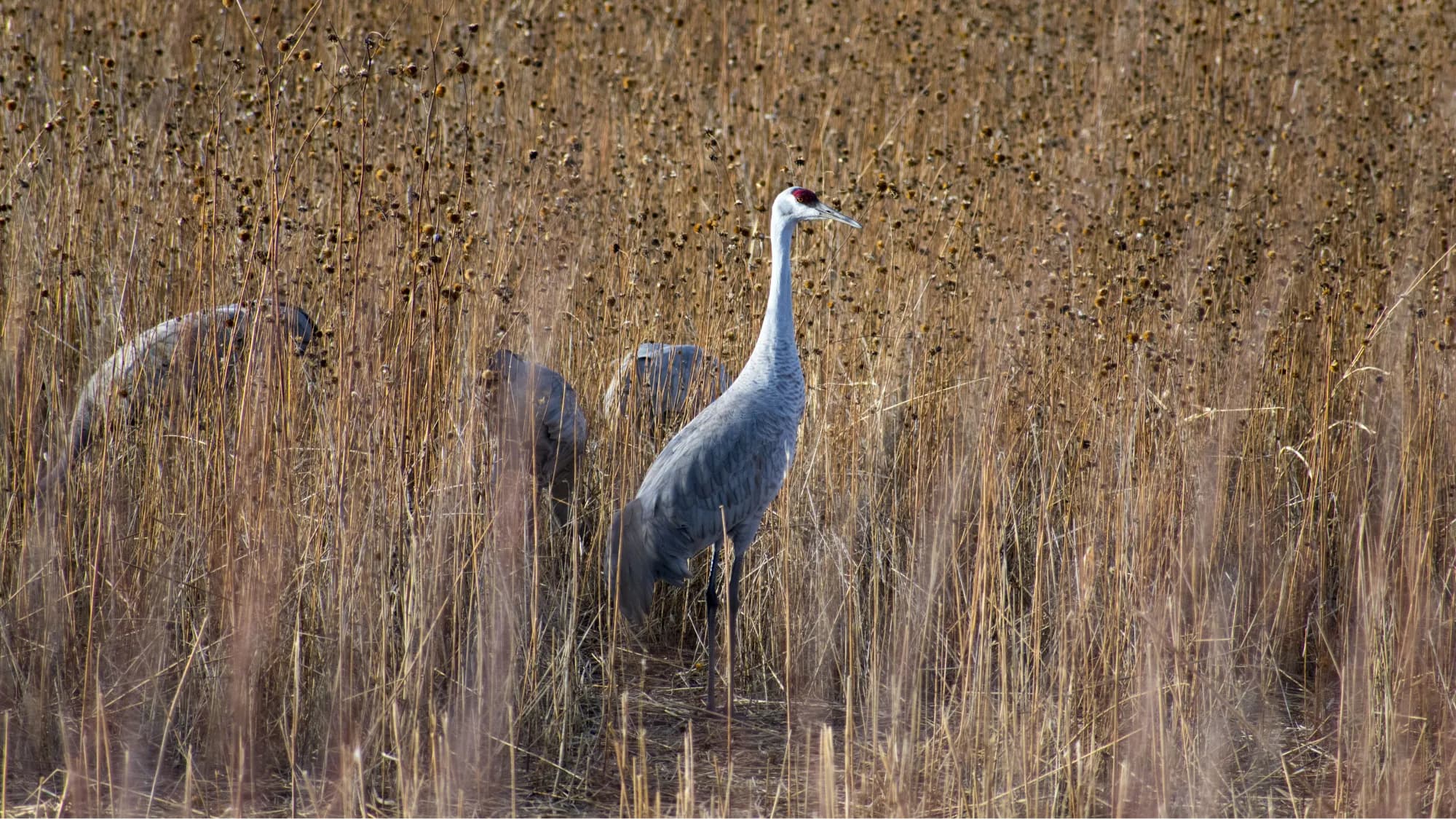
Spend a day there and the rhythm sets in: cranes stalking the corn stubble at a stately pace, the light going gold and then pink over the Chupadera Mountains, and twice a day the great roar of forty thousand geese deciding, all together, to be somewhere else. It's engineered habitat - none of this would survive without the dikes and the gates and the people who work them - and it's still one of the wildest things you can watch on the continent.